


South Park: Phone Destroyer™
4.667.94K Reviews
App Specs
- Version
- 5.4.2
- Updated On
- License
- Free
- Downloads
- 10,000,000+
- Developer
- Ubisoft Entertainment
- Categories
- Strategy
- Platform
- Android, iOS
Screenshots



 Analysis by AppCompare
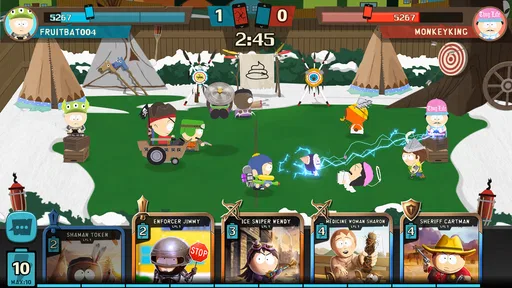
The first time I played South Park: Phone Destroyer™, I understood its appeal almost immediately: the match starts quickly, I place a card, the battlefield reacts, and I am already deciding whether to spend my next move on pressure, defense, or a risky counterattack. It is a strategy game built around short card duels, but it does not feel like a quiet numbers exercise. The South Park setting gives every exchange a loud, mischievous personality, while the card system asks me to think about timing rather than simply dropping the strongest unit available.
That combination makes it easy to try for a few minutes and surprisingly difficult to put down. A completed battle gives me a reason to open the next reward, the reward encourages another deck adjustment, and the deck adjustment makes the next match feel slightly different. I found the loop most enjoyable when I treated each fight as a small experiment instead of expecting every result to be perfectly fair or completely under my control.
How the card battle loop feels in actual play
I find the card battles most rewarding when I treat each play as a choice with a consequence, rather than rushing to use whatever is available. A useful habit is to pause before committing and ask what that card is meant to accomplish in this particular exchange. That small check makes it easier to spot whether a match is going wrong because of timing, deck construction, or something outside the battle itself.
The first action is simple, but the decision is not
The basic entry point is friendly. I choose a card, put it into the fight, and watch it move toward the opposing side. That first action can look straightforward, yet it immediately raises useful questions. Should I commit a strong card now, hold energy for a response, or place a cheaper option that lets me learn what the opponent is planning? The game rewards players who notice the difference between acting quickly and acting well.
Cards are not just attacks waiting to happen. Their position, timing, durability, and relationship with other cards all influence the result. A unit that looks effective in isolation may be a poor choice if it arrives too early and gets surrounded. Likewise, a modest card can become valuable when it buys time for another unit to reach the opponent. I began paying more attention to the order of my plays than to the headline strength of individual cards.
This is where the game separates itself from a purely casual tap-and-win experience. The controls are accessible, but the battlefield keeps asking me to interpret information. I need to watch what has already been played, estimate what the other side can answer with, and decide whether preserving a card is more useful than taking immediate damage. Even when a match lasts only a short while, there is room for a meaningful sequence of choices.
The South Park theme also affects that first impression. The characters, jokes, and deliberately irreverent tone make the battle feel less solemn than many fantasy card games. I would not recommend it to someone who dislikes crude humor or wants a serious, polished military atmosphere. The Mature 17+ rating is important here: the presentation is built for an adult audience, not for children looking for a harmless cartoon strategy game.
Worth Reading Before You Choose

Flipboard Shows What News Apps Must Do Beyond the Feed

Switching to Android Auto Means Rethinking Your Driving Routine

Google Calendar Makes a Crowded Week Easier to Manage

Ludo King Makes the Most of the Minutes Between Plans

Baby Panda World Brings Quick Play to Modern Phones, but Its Game Library Feels Busy

ESPN’s Live Game View Makes Following Close Games Easier
Feedback arrives after every placement
What kept me engaged was the speed of the feedback. After I play a card, I can usually see whether the decision helped within moments. A unit may absorb pressure, expose a weakness, or create an opening that I did not expect. That immediate response gives the game a satisfying rhythm: action, reaction, correction, and another action.
Good feedback is not always positive feedback. A failed push can still teach me that I spent too much too soon. A defensive play can reveal that I was protecting the wrong side of the battlefield. I liked that the game often made my mistakes legible. Instead of feeling as though nothing happened, I could look back at the sequence and identify the point where my plan stopped making sense.
That rhythm is especially useful for new players learning card strategy. I did not need to understand every possibility before starting. I could make a play, observe the response, and gradually learn which types of cards worked well together. The danger is that quick feedback can also encourage impulsive play. Because the action is lively, it is tempting to place something simply to keep the screen busy. The better habit is to pause for a second and ask what the opponent gains if I spend my current resources.
One practical approach helped me more than constantly changing my deck: I tried to identify one job for each card before a match. A card might be there to start pressure, absorb damage, interrupt an advance, or support a stronger attacker. When I knew the job, I was less likely to waste it in a panic. This is a small but important shift from collecting cards to building a plan.
Rewards make experimentation feel worthwhile
After a battle, the reward stage gives the loop its forward pull. Winning feels good, but the more interesting benefit is that the result gives me a reason to inspect my collection and reconsider my choices. I can ask whether a newly available option solves a problem in my current deck or merely looks attractive because it is different.
I recommend resisting the urge to rebuild everything after every match. A better workflow is to change one or two cards, then play several battles to see whether the change actually improved the deck. This makes the reward system more useful because it turns new cards into controlled experiments. If I replace too many pieces at once, I lose track of what helped and what created a new weakness.
The reward loop also has a trade-off. Progress can make the game feel motivating, but it can create pressure to keep playing when I would normally stop. The presence of in-app purchases, ranging from $0.99 to $49.99 per item, means players should decide in advance how they want to approach spending. I found the healthiest way to play was to judge a purchase by whether it improved my enjoyment, not by whether it promised to remove the frustration of a difficult match.
Because the game is free to download, it is easy to test without making an initial commitment. That is a genuine strength for curious players. At the same time, free access does not mean the complete experience is free from temptation. Anyone who dislikes progression systems that invite optional spending should approach carefully, especially if competition makes them impatient.
The reset is what makes another session appealing
Every completed battle resets the immediate situation. The cards return to their broader collection, the next opponent brings a different problem, and the previous mistake becomes information rather than a permanent obstacle. I liked this reset because it keeps losses from feeling final. A bad result can lead directly to a deck tweak, a timing adjustment, or a decision to play more patiently.
The reset also prevents a single successful tactic from feeling completely safe. A strategy that works against one opponent may struggle against another style. That uncertainty is the reason I often wanted one more match: not simply to recover from a loss, but to test whether I had actually learned something. The game is strongest when I use that next session to answer a specific question, such as whether a defensive opening gives me enough time to build a counterattack.
There is a less comfortable side to the same structure. Repeated matches can blur together when I am playing without a clear goal. The action remains entertaining, but the strategic thinking becomes shallow if I place cards automatically. I got more from the game when I set a small objective before starting: practice holding resources, test a new combination, or focus on protecting my strongest push. Without that intention, the reward-reset cycle can become repetitive rather than satisfying.
A realistic everyday use case is a short break between tasks. I can start a battle, make decisions continuously, and finish with a clear result instead of entering a long story chapter that demands uninterrupted attention. That makes it convenient for players who enjoy compact strategy sessions. It is less suitable when I need a completely calm distraction, because the matches ask for attention and the tone can be noisy and provocative.
Deck building is where the strategy becomes personal
The most rewarding part of the game, in my experience, is not simply unlocking another card. It is discovering what kind of player I am becoming. I tend to prefer a deck that can absorb an early attack and then turn the opponent’s overcommitment into an opportunity. Another player may enjoy constant pressure and accept the risk of running low on options. The game gives room for both instincts, provided the cards support a coherent approach.
I learned to evaluate a deck by its recovery plan. What happens when the first attack fails? Can I defend without spending everything? Do I have a way to regain control after the opponent reaches my side? These questions are more useful than asking whether every card is individually powerful. A deck with several impressive options can still feel awkward if they all demand the same timing or compete for the same role.
Another useful habit is to watch the battlefield rather than stare only at the card bar. The opponent’s movement, the location of a clash, and the survival of a supporting unit can matter more than the next card I was planning to play. I occasionally lost matches because I was preparing an elegant sequence while ignoring an immediate threat. Looking up from the planned combo and responding to what is actually happening is one of the simplest ways to improve.
For players coming from familiar mobile card battlers, this game offers a different emphasis. It still has the recognizable cycle of collecting options, arranging a deck, entering a match, and refining the plan afterward. However, the South Park presentation and character-driven humor give it a more specific identity than a generic fantasy card game. If you want a quiet, abstract system where the theme stays out of the way, another strategy title may suit you better. If personality helps you stay interested while learning, this setting is a strong advantage.
Where the game creates friction
The game is not equally comfortable for everyone. The Mature 17+ content can be a decisive limitation, and the humor may feel distracting or unpleasant if South Park is not your style. I also found that the quick matches can encourage a “just one more” habit, particularly after a close loss. The reset is motivating, but it can also keep me chasing a better result longer than planned.
There is also a difference between learning from a loss and feeling blocked by one. When I understood the cause of a defeat, the next attempt felt worthwhile. When the result seemed to come from a mismatch I had not prepared for, the reward loop was less satisfying. That is a normal tension in competitive card games, but it matters for anyone who wants a consistently relaxing experience.
Players who dislike optional purchases should make a personal rule before they begin. I would avoid spending simply because a losing streak feels irritating. If you do spend, treat it as entertainment spending rather than a shortcut to guaranteed success. The game is more enjoyable when decisions in the match still matter and the collection remains something to explore rather than a source of pressure.
Device compatibility is broad enough for older supported phones and tablets, since the minimum operating system is Android 7.0. The current version is 5.4.2, so keeping the app updated is sensible when an update is available through the relevant store. I would still check that the device has enough free space and that the screen is comfortable for watching several units and effects at once, especially during busy exchanges.
Who should play it and who should skip it
I would recommend this game to someone who likes strategy but does not want every session to become a long commitment. It suits players who enjoy learning through repetition, adjusting a deck gradually, and making decisions under pressure. Fans of South Park will probably appreciate the tone more than players who see the theme as a distraction.
It is also a good fit for a person who enjoys turning losses into experiments. The strongest moments come when I can explain why a match went wrong and carry that lesson into the next battle. The game rewards attention, but it does not require me to study a huge rulebook before trying the first card.
I would suggest skipping it if you want a purely family-friendly game, dislike crude animated humor, or prefer strategy without collection and progression pressure. It is not my first choice for someone seeking a slow, contemplative board-game atmosphere. I would also point competitive players toward a different option if they want a more restrained theme or a system where optional purchases never enter the conversation.
The loop verdict after extended play
My overall impression is that South Park: Phone Destroyer™ succeeds because its core loop is easy to enter but difficult to play thoughtfully. The first action is immediate, the feedback is visible, the reward encourages reflection, and the reset makes another attempt feel meaningful. The game does not need a long session to provide a complete arc, yet it offers enough room for deck decisions and timing lessons to keep repeated battles from being entirely automatic.
The best way to enjoy it is to give each session a purpose. Test one deck change, practice a certain response, or review the moment where control slipped away. That approach turns the reward into useful information instead of just another reason to tap forward. It also protects the game from becoming a mindless cycle of matches, rewards, and frustration.
Ubisoft Entertainment has built a strategy game with a very specific personality, and that personality will decide whether the experience works for you. Its free price makes trying it easy, while the 4.6 average from around 654 thousand ratings and more than 10 million installs show that it has attracted a substantial audience. I would not treat popularity as a substitute for personal taste, but it does suggest that the compact card-duel format has lasting appeal.
For me, the recommendation is clear with one condition: enjoy the humor, set sensible boundaries around spending, and play with a plan rather than chasing every immediate result. When those conditions fit, the next session has a good reason to begin. This is a lively strategy game for players who want quick battles with consequences, not a passive cartoon-themed time filler.
Pros
- Combines card collecting with real-time strategy battles.
- Features familiar South Park characters and locations.
- Short matches make it easy to play during quick breaks.
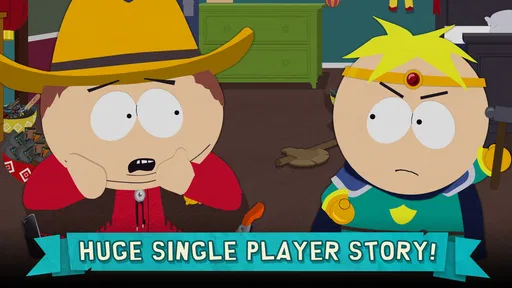
- Offers both solo missions and competitive multiplayer modes.
- Humorous dialogue and cutscenes capture the show’s irreverent tone.
Cons
- Progress can feel slow without regularly upgrading cards.
- Competitive matches may be frustrating against stronger decks.
- Requires a stable internet connection to play.
- The cartoon humor and mature themes are not suitable for children.
- In-app purchases can tempt players seeking faster progression.
FAQs for South Park: Phone Destroyer™
What is South Park: Phone Destroyer™?
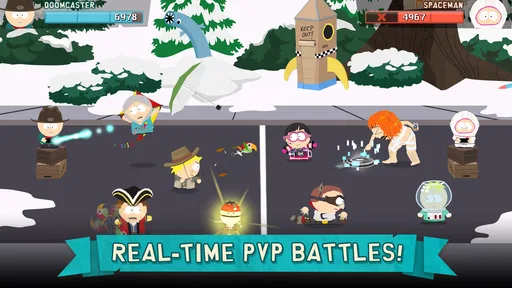
South Park: Phone Destroyer™ is a free-to-play mobile strategy and collectible card game based on the animated series. You build a deck of character, spell, and item cards, then use them in real-time battles. The game combines lane-based combat, humor inspired by South Park, story missions, and competitive multiplayer matches.
Is South Park: Phone Destroyer™ free to download and play?
Yes, the game can be downloaded and played for free on supported Android and iOS devices. However, it includes optional in-app purchases for card packs, resources, and other progression-related items. You can make progress without spending money, although upgrading cards and building competitive decks may require more time when playing entirely for free.
Does the game require an internet connection?
Yes, South Park: Phone Destroyer™ generally requires an active internet connection because its progression, account data, events, and multiplayer battles depend on online services. It is not designed as a fully offline game. A stable Wi-Fi or mobile-data connection is recommended, particularly during real-time PvP matches, where interruptions may affect the battle.
What type of gameplay does South Park: Phone Destroyer™ offer?
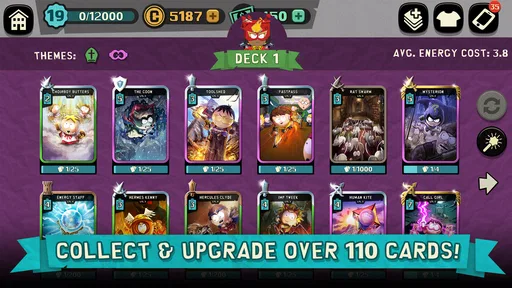
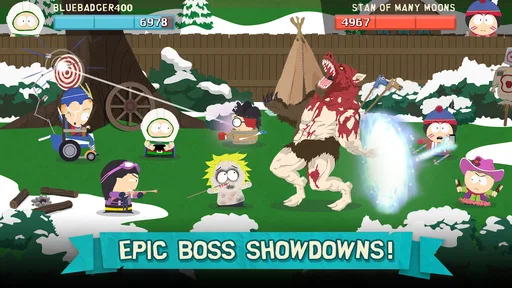
The game offers real-time card-based strategy gameplay. You deploy South Park characters and use special cards to attack enemies, defend your New Kid, and control the battlefield. Cards belong to different themes and roles, so deck construction is important. Alongside the single-player story, you can compete against other players in online PvP battles.
Is South Park: Phone Destroyer™ suitable for children?
Despite its cartoon presentation, the game is primarily intended for older players and South Park fans rather than young children. It contains mature humor, profanity, cartoon violence, and themes associated with the television series. Parents should also consider online interactions, competitive features, and optional purchases before allowing children to download or play it.


